Back to Top

University Ministry for Social Justice


What Is Social Justice in the Catholic Tradition?

Rooted in the Gospel of Jesus Christ, Catholic Social Teaching, and the Jesuit tradition, Social Justice Ministry at Loyola University New Orleans cultivates faith, community, service, and advocacy in pursuit of right relationship with God, one another, and all of creation.
Jesus’ ministry reveals a God who stands with the poor, heals the excluded, welcomes the stranger, and calls people into deeper relationship and community. The prophets continually cry out against oppression and demand justice for the widow, the orphan, and the foreigner. Catholic social justice is therefore not simply charity or service, though both are essential. It is also the ongoing work of transforming social, economic, political, and cultural structures so that all people can flourish and participate fully in society.
In the Jesuit tradition, this work flows from prayer, reflection, and discernment. Social justice is rooted in a faith that does justice and calls us to become people for and with others. Through prayerful reflection and action, we seek to find God in all things, especially in encounters with those on the margins and in the needs of our world.
Catholic Social Teaching develops this vision through principles such as the dignity of the human person, solidarity, care for creation, the common good, participation, and a preferential option for the poor and marginalized. These teachings invite communities to confront injustice, work for peace, protect human rights, and accompany those whose voices are too often ignored.
As a Jesuit institution, this mission is shaped by the Society of Jesus's Universal Apostolic Preferences. We seek to:
  • show the way to God through discernment and spiritual depth,
  • walk with the excluded, and those made vulnerable,
  • accompany young people in creating a hope-filled future,
  • and care for our common home.
Social justice in the Jesuit tradition is rooted in faith and expressed through action. It calls us to reflection, solidarity, advocacy, and courageous hope. It invites us not only to serve others, but to learn from them, stand beside them, and work together for a more just and compassionate world.

Catholic Social Teaching: A Tradition Rooted in Human Dignity

Catholic Social Teaching (CST) is the Church's reflection on social, economic, political, and cultural life through the lens of the Gospel. Grounded in Scripture and shaped by centuries of Christian thought and practice, CST provides a framework for promoting human dignity, justice, solidarity, and the common good.
Rather than offering a political platform or a fixed set of policy prescriptions, Catholic Social Teaching seeks to answer a central question: What does faith require of us in our relationships with one another and with the wider world?
A Brief History
The roots of Catholic Social Teaching can be traced to the life and teachings of Jesus, who proclaimed the dignity of every person and called his followers to care for the poor, welcome the stranger, and work for justice. These values were lived out in the early Christian communities and continued to shape the Church's understanding of social responsibility throughout its history.
The modern tradition of Catholic Social Teaching is often dated to 1891, when Pope Leo XIII issued Rerum Novarum ("On the Condition of Labor"). Responding to the profound social and economic changes of the Industrial Revolution, the encyclical defended the dignity of workers, advocated for just wages, and challenged both unrestrained capitalism and socialism's disregard for individual rights.
Since then, Catholic Social Teaching has continued to develop in response to changing historical circumstances. This development flows from the Church's ongoing practice of communal discernment, in which believers prayerfully reflect together on Scripture, tradition, reason, lived experience, and the signs of the times. Through this process, the Church seeks to understand how the Gospel speaks to the challenges of each generation.
As issues such as economic inequality, racism, migration, war, environmental degradation, and globalization have emerged or evolved, Catholic Social Teaching has grown through the contributions of popes, bishops, theologians, religious communities, and lay people worldwide. It remains a living tradition that continues to guide Christians in responding faithfully to contemporary social realities.

Core Principles of Catholic Social Teaching

Life and Dignity of the Human Person
Every human being is created in the image and likeness of God and possesses inherent dignity. Respect for human life and the protection of human rights form the foundation of all Catholic social teaching.
Call to Family, Community, and Participation
Human beings are social by nature and flourish within relationships and communities. Every person should have the opportunity to participate fully in society's social, economic, political, and cultural life.
Rights and Responsibilities
Human dignity requires that people have access to basic rights, including food, shelter, education, healthcare, and meaningful work. These rights are accompanied by responsibilities toward others and the broader community.
Preferential Option for the Poor and Vulnerable
The moral measure of a society is found in how it treats its most vulnerable members. Catholics are called to place the needs of those experiencing poverty, exclusion, and injustice at the center of social concern.
The Dignity of Work and the Rights of Workers
Work is a participation in God's ongoing creation and a source of human dignity. Workers deserve fair wages, safe working conditions, and the right to organize and advocate for their interests.
Solidarity
Because all people belong to one human family, we are called to recognize our interconnectedness and stand with one another across boundaries of race, nationality, religion, and economic status.
Care for God's Creation
The natural world is a gift entrusted to humanity. Stewardship of creation calls people to protect the environment and ensure that future generations can flourish.
Living Catholic Social Teaching
Catholic Social Teaching is not simply a body of ideas but a call to action. It challenges individuals and communities to put faith into practice through service, advocacy, education, and participation in public life. By promoting human dignity, seeking justice, caring for creation, and standing in solidarity with those on the margins, Catholics strive to build a society that reflects the values of the Gospel and advances the common good for all.

Loyola University Community Action Program (LUCAP)

LUCAP is Loyola’s service and social justice program rooted in the Jesuit tradition and inspired by Catholic Social Teaching. Open to all students and guided by the Minister for Social Justice, LUCAP invites the Loyola community to engage in meaningful service, reflection, advocacy, and relationship-building in response to the needs of our local communities.
Through direct service opportunities, justice initiatives, educational programs, and community partnerships, participants encounter the realities facing our local communities while responding with compassion, solidarity, and hope. Whether serving alongside local organizations, participating in awareness campaigns, or engaging in conversations about systemic injustice, LUCAP encourages students to connect faith with action and become active participants in building a more just and humane society.
At the heart of LUCAP is the conviction that faith and justice belong together. We believe service is not about “helping others” from a distance, but about walking with communities, listening deeply, and recognizing our shared human dignity. Through reflection, discernment, and action, participants are invited to grow as people for and with others while working collaboratively for the common good.
Our Commitments
Guided by Catholic Social Teaching and the Jesuit mission, LUCAP is committed to:
Human Dignity
Recognizing the sacred worth of every person and fostering relationships rooted in respect, compassion, and belonging.
The Common Good
Working toward communities where every person has access to the conditions necessary to flourish.
Solidarity
Standing with those who are marginalized through accompaniment, advocacy, and shared action for justice.
Care for Our Common Home
Responding to ecological challenges through sustainability, environmental justice, and reverence for creation.
A Preferential Option for the Poor
Centering the voices and experiences of those most impacted by injustice and inequality.
Get Involved
There are many ways to become part of the LUCAP community:
  • Participate in service and justice initiatives throughout the year
  • Join volunteer opportunities that build community and raise awareness
  • Collaborate on advocacy and educational campaigns
  • Develop your own justice-focused project with mentorship and support
  • Grow as a leader through reflection, dialogue, and action
LUCAP students are more than volunteers. They are companions, advocates, and leaders formed by the Jesuit commitment to be people for and with others. Together, we seek to create a world marked by justice, compassion, and hope.
Support LUCAP
Help sustain student leadership, service opportunities, community partnerships, and justice initiatives by making a gift to LUCAP. Your support enables students to put faith into action through meaningful engagement with our local communities.
   Click here to make a gift to LUCAP
To learn more or to get involved, contact Lindy Brasher, University Minister for Social Justice, at lmbrashe@loyno.edu.

800dog


Ignatian Family Teach-In for Justice (IFTJ)

2026 Ignatian Family Teach-In for Justice | Washington, D.C. | November 14-16, 2026
The Ignatian Family Teach-In for Justice (IFTJ) is an annual gathering of students, educators, advocates, and members of the broader Jesuit community committed to living out a faith that does justice. Sponsored by the Ignatian Solidarity Network, the conference brings together participants from Jesuit high schools, colleges, universities, parishes, and organizations across the country to learn, reflect, pray, and advocate for social change.
Grounded in the Jesuit tradition and Catholic Social Teaching, the Teach-In invites students to deepen their understanding of issues such as racial justice, immigration, environmental justice, economic inequality, human dignity, and peacebuilding. Through keynote speakers, workshops, community dialogue, prayer experiences, and advocacy training, participants are challenged to reflect on how their faith calls them to respond to the realities of injustice in the world.
At Loyola University New Orleans, participation in the Ignatian Family Teach-In for Justice is an opportunity for students to engage the broader Jesuit mission beyond campus while building community with others committed to justice, solidarity, and hope. Students are encouraged to connect reflection with action by learning practical advocacy skills and participating in conversations that inspire meaningful social transformation.
In the spirit of Ignatian spirituality, the Teach-In emphasizes discernment, accompaniment, and finding God in all things. Students return with a deeper understanding of justice, a stronger sense of community, and renewed commitment to becoming people for and with others.
Through prayer, education, advocacy, and solidarity, the Ignatian Family Teach-In for Justice reminds us that the work of justice is both deeply spiritual and deeply communal, calling us to build a more compassionate and hope-filled world.
To learn more, contact Lindy Brasher, University Minister for Social Justice, at lmbrashe@loyno.edu.

iftj


Ignacio Volunteers (Iggy Vols)

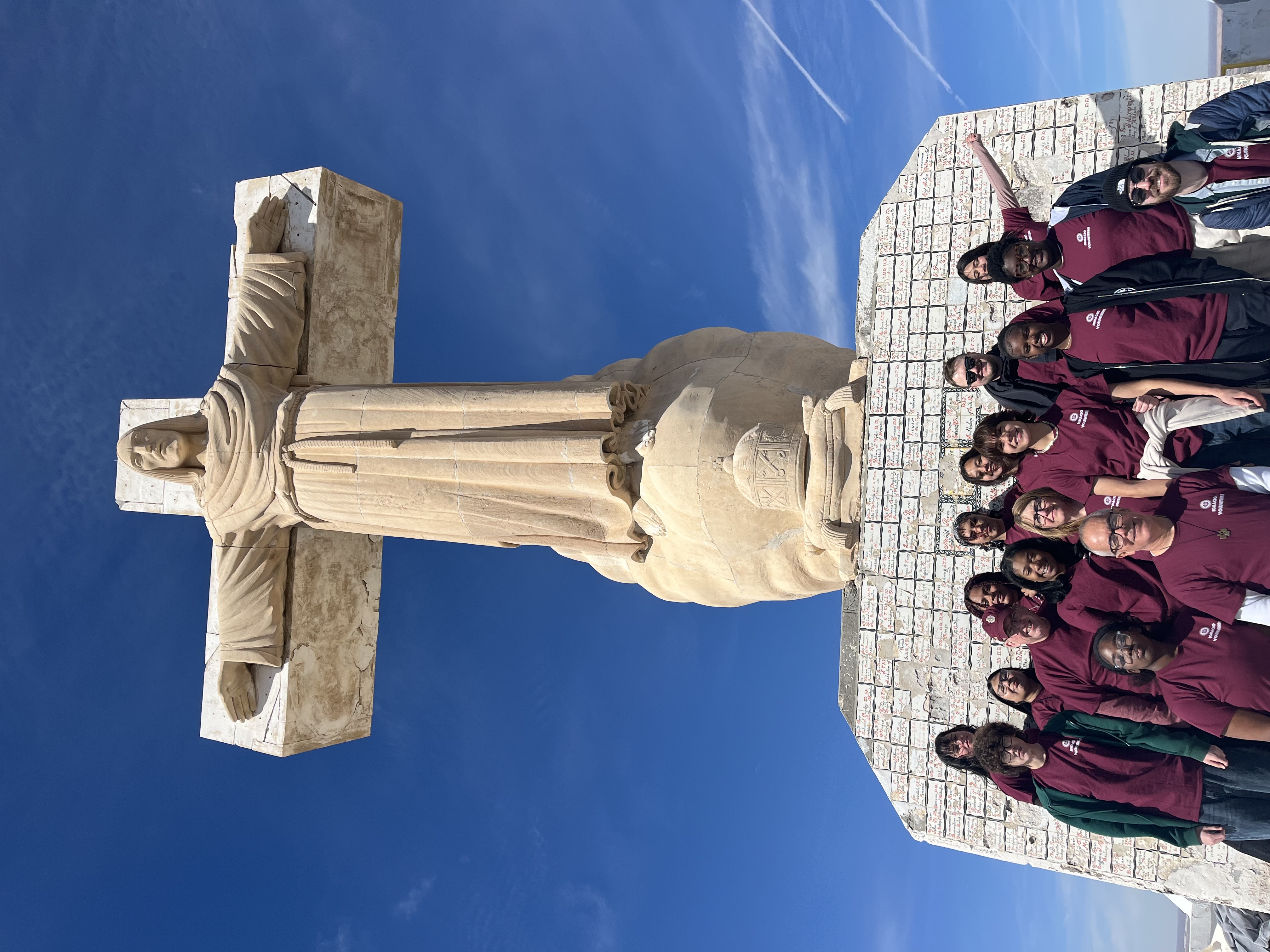
The Ignacio Volunteers Program offers students the opportunity to encounter the world through service, solidarity, reflection, and community. Rooted in the Jesuit tradition and inspired by the life of St. Ignatius of Loyola, Iggy Vols invites students to step beyond the classroom and form meaningful relationships with communities, both locally and globally.
More than a service trip, an immersion experience is an invitation to transformation. Through shared living, community partnerships, prayer, reflection, and education, students are challenged to examine the realities of injustice, listen deeply to others' experiences, and discern how they are being called to respond in faith and action.
Participants travel, serve, learn, and reflect together as one community. In the months leading up to each immersion, students gather regularly for formation, dialogue, and preparation focused on the social, political, economic, and spiritual realities connected to the communities they will encounter.
Immersions emphasize accompaniment over charity. Students are invited not simply to “help,” but to walk alongside others with humility, openness, and a willingness to learn. Through these encounters, participants deepen their understanding of solidarity, community, and justice while discovering how faith calls us into relationship with the world.
Our Mission
The Ignacio Volunteers Program seeks to form students who are:
  • committed to service rooted in justice and human dignity,
  • attentive to the voices and experiences of marginalized communities,
  • open to personal and spiritual transformation,
  • and prepared to live as people for and with others.
Core Values
Service
We place faith into action through compassionate presence, generous service, and a willingness to listen and learn with open hearts.
Solidarity
We seek to walk with communities rather than act for them, recognizing that authentic justice begins with relationship, mutuality, and shared humanity.
Community
We believe transformation happens together. Through shared experiences, honest reflection, and supportive relationships, participants grow in compassion, understanding, and a sense of belonging.
Spirituality
Grounded in Ignatian spirituality, we reflect on where God is present in our experiences and remain open to the diverse ways people encounter meaning, faith, and hope.
What Students Experience
  • Direct service with community organizations and local partners
  • Educational formation around social justice issues and systemic inequality
  • Daily reflection and shared spiritual practice
  • Intentional community living and relationship-building
  • Opportunities for leadership, discernment, and personal growth
Ignacio Volunteers challenges students to encounter the world differently. By crossing boundaries, building relationships, and reflecting deeply on experiences of justice and injustice, participants return transformed, more aware of their responsibility to others, and more committed to building a world rooted in compassion, dignity, and hope.
Support Iggy Vols
Every gift helps make immersion experiences accessible to more students. Donations support participant scholarships, formation programming, travel costs, community partnerships, and other resources that allow students to engage fully in experiences of service, solidarity, reflection, and accompaniment.
   Click here to make a gift to support Ignacio Volunteers.
To learn more, contact Lindy Brasher, University Minister for Social Justice, at lmbrashe@loyno.edu.

60

Fall 2026 Civil Rights Immersion 

December 12-18, 2026

The Fall 2026 Ignacio Volunteers (Iggy Vols) Civil Rights Immersion invites participants to explore how the pursuit of human dignity extends beyond voting rights and legal equality to include access to clean air, clean water, safe communities, and a healthy environment. Rooted in Catholic Social Teaching, the program examines the ongoing legacy of the Civil Rights Movement through the interconnected lenses of racial, environmental, and care for creation justice.
Through visits to the Legacy Museum and National Memorial for Peace and Justice in Montgomery, Alabama, participants will engage the history of slavery, racial terror, segregation, and mass incarceration, while reflecting on how systems of inequality continue to shape communities today. In Atlanta, participants will study the life and teachings of Howard Thurman and explore how his spiritual vision influenced Dr. Martin Luther King Jr. and the Civil Rights Movement. Through readings from Jesus and the Disinherited and engagement with King's vision of the Beloved Community, participants will examine the moral and spiritual foundations of justice, nonviolence, and human dignity.
The immersion will also explore how the struggle for justice continues through the environmental justice movement. Through the study of Louisiana's Cancer Alley, participants will examine how historically marginalized communities often bear a disproportionate share of environmental and health burdens. By engaging community voices and local advocates, participants will consider how environmental racism represents a contemporary civil rights issue and an ongoing challenge to the common good.
In collaboration with the Jesuit Social Research Institute (JSRI), participants will engage the history and ongoing work of civil rights and community-based movements in Louisiana. Through conversations with local communities, advocates, scholars, and faith leaders, participants will examine how these movements have advanced and continue to advance human dignity, racial equity, environmental stewardship, and the common good.
Drawing on the principles of human dignity, solidarity, the preferential option for the poor, and care for creation, and inspired by Pope Francis' call to integral ecology in Laudato Si', participants will explore how the protection of both people and the environment is essential to building a more just, compassionate, and sustainable society. Through study, reflection, encounter, and dialogue, participants will connect the lessons of the Civil Rights Movement to contemporary challenges and opportunities for social transformation. 
Participants must be undergraduate students in good standing with the University, willing and able to travel, and committed to attending weekly formation meetings throughout the semester.
To learn more, contact Lindy Brasher, University Minister for Social Justice, at lmbrashe@loyno.edu.

Imago Encounter

The Imago Encounter invites LGBTQIA+ students, friends, and companions on the journey to gather in prayer, reflection, dialogue, and community within the Jesuit Catholic tradition. Rooted in the belief that every person is created in the imago Dei, the image of God, this experience creates space to explore the relationship between identity, faith, and belonging with openness, authenticity, and care.
Grounded in Ignatian spirituality and the Jesuit practice of finding God in all things, the Imago Encounter fosters meaningful conversation, attentive listening, and shared reflection. Through storytelling, prayer, and dialogue, participants are invited to encounter one another more deeply, recognize the dignity of every person, and discover God's presence in their own stories and in the stories of others.
The Imago Encounter reflects Loyola's commitment to cultivating a community where all people are welcomed as bearers of God's image and giftedness. By creating opportunities for honest conversation and mutual understanding, the encounter seeks to strengthen relationships, nurture trust, and foster a deeper sense of connection within the Loyola community.
The Imago Encounter is not an end in itself, but a beginning. It serves as a pathway into deeper belonging, inviting participants to continue building relationships, engaging campus life, and contributing their gifts in service of the common good. In the spirit of forming people for and with others, students are encouraged to become co-creators of a community marked by compassion, accompaniment, hope, and genuine care for one another.
To learn more, contact Lindy Brasher, University Minister for Social Justice, at lmbrashe@loyno.edu.

Imago


Living Radical Hospitality: Cultivating Justice Through Ora et Labora

Subiaco Abbey, Subiaco, Arkansas | March 25-28, 2027

Living Radical Hospitality: Cultivating Justice Through Ora et Labora invites students to participate in a transformative Triduum experience at Subiaco Abbey in Subiaco, Arkansas, where the Benedictine tradition of prayer, work, and community offers a unique lens for exploring faith and justice. Rooted in the Benedictine principle of ora et labora ("prayer and work"), this experience creates space to reflect on how hospitality, simplicity, stewardship, and communal responsibility can shape the way we live and engage the world.
Grounded in the Benedictine commitment to welcoming all as Christ, participants will encounter the rhythms of monastic life through shared prayer, reflection, dialogue, and engagement with the monastic community. Through these experiences, students are invited to consider how radical hospitality can become a practice of justice that affirms human dignity, fosters belonging, and strengthens our responsibility to one another.
The experience extends beyond the monastery through visits to Buffalo National River and Mount Magazine, where participants will engage the beauty and wonder of the natural world. These encounters with creation provide opportunities for contemplation and reflection on our relationship with the earth, inviting participants to consider how care for creation is deeply connected to the pursuit of justice and the common good.
Living Radical Hospitality is not simply an opportunity to learn about Benedictine spirituality, but an invitation to experience it. By engaging in prayer, community, work, and creation, participants are encouraged to discover new ways to integrate contemplation and action in their own lives and to recognize how everyday acts of welcome, attentiveness, and service can contribute to a more just and compassionate world.
In the spirit of Benedictine hospitality and Loyola's mission of forming people for and with others, this experience seeks to cultivate a deeper awareness of God's presence in all things and inspire participants to become builders of communities marked by generosity, belonging, and hope.
To learn more, contact Lindy Brasher, University Minister for Social Justice, at lmbrashe@loyno.edu.

1


Iggy’s Cupboard

At Loyola, social justice begins within our own community. Iggy’s Cupboard exists to ensure that every student, staff member, and faculty member has access to the basic resources they need to live, learn, and thrive with dignity.
Rooted in the Jesuit value of cura personalis, or care for the whole person, Iggy’s Cupboard reflects Loyola’s commitment to solidarity and mutual care by responding to the immediate needs of our campus community.
Located in the lower level of the Danna Student Center, Iggy’s Cupboard provides free food, hygiene products, and other essential items to any member of the Loyola University New Orleans community who may need extra support. The cupboard is operated through a partnership between Student Life & Ministry (SLM) and the Student Government Association (SGA) as part of Loyola’s commitment to build a campus culture rooted in compassion, dignity, and belonging.
The cupboard is stocked with both perishable and non-perishable food items, as well as toiletries and everyday essentials. Guests are welcomed with respect and confidentiality and can choose the items that best meet their needs, with support from trained cupboard assistants and volunteers. All services and resources are provided free of charge.
Iggy’s Cupboard is open Monday through Friday from 10:00 am to 3:00 pm, and no appointment is necessary. Students, faculty, and staff are encouraged to simply stop by whenever support is needed.
Donations
The Loyola community also plays an active role in sustaining this ministry of care. Donations of unopened, unused, and non-expired items may be dropped off at the cupboard, the Student Life & Ministry suite, or designated donation bins across campus. Community members can also support the cupboard through one-time or recurring monetary gifts or by purchasing needed items through our Amazon Wishlist.
Volunteer Opportunities
Students interested in volunteering can become involved through training and ongoing support, helping create a welcoming and respectful environment for all who visit the cupboard. Through these shared efforts, Iggy’s Cupboard reflects Loyola’s belief that caring for one another is an essential expression of justice, community, and human dignity.

cup

For questions, volunteering opportunities, or to organize a donation drive, contact Lindy Brasher, University Minister for Social Justice, at lmbrashe@loyno.edu.

Swipe Out Hunger

Through Loyola’s partnership with Sodexo, the Swipe Out Hunger program helps address food insecurity by providing meal support to students in need. A limited number of meal swipes are available each semester through the Meal Swipe Bank, ensuring that students facing financial hardship can continue to access nutritious meals and remain fully engaged in campus life. Swipe Out Hunger reflects the belief that no student should have to choose between meeting basic needs and pursuing their education.
Students experiencing food insecurity may request meal swipes through the Swipe Out Hunger Meal Request Form. Requests are handled with care and confidentiality, with the goal of providing timely support to students navigating temporary or ongoing challenges.
By working together as a campus community, Loyola continues to foster a culture in which students are supported, valued, and empowered to thrive academically and personally.
To learn more, contact Lindy Brasher, University Minister for Social Justice, at lmbrashe@loyno.edu.

The Peter Claver Fund

Named in honor of St. Peter Claver, the 17th-century Jesuit priest who dedicated his life to serving enslaved persons arriving in Cartagena, the Peter Claver Fund reflects Loyola’s commitment to human dignity, solidarity, and compassionate support for students facing hardship.
The Peter Claver Fund provides short-term financial assistance to students facing urgent, unexpected challenges that may threaten their ability to remain enrolled or to fully participate in academic life. Assistance may include support for textbooks and required course materials, transportation needs, emergency travel, or other essential expenses connected to academic success and student stability.
As gap funding, the grant is designed to respond quickly and compassionately, with priority given to students facing significant financial hardship or the risk of withdrawing from the university. Through this fund, the Loyola community seeks to accompany students with compassion and care, ensuring that unexpected barriers do not stand in the way of education, opportunity, and hope.
Support the Peter Claver Fund
Through the generosity of the Loyola community, the Peter Claver Fund offers hope and practical support to students navigating unexpected financial challenges. Contributions help provide emergency assistance for essential needs, allowing students to remain focused on their education and continue their journey toward graduation.
   Click here to support the Peter Claver Fund.
To learn more or apply for assistance, contact Lindy Brasher, University Minister for Social Justice, at lmbrashe@loyno.edu.


me
Dr. Lindy Brasher serves as University Minister for Social Justice at Loyola University New Orleans, where she cultivates communities rooted in encounter, belonging, justice, and hope. Shaped by a Jesuit education and grounded in religious education and Christian spirituality, she accompanies students as they explore the relationship between faith, service, advocacy, and the pursuit of the common good.
Lindy's ministry is deeply informed by the Ignatian invitation to find God in all things and by the Franciscan vision of St. Bonaventure, who understood creation, Scripture, and the human soul as places of revelation through which God reveals divine love. She believes that social justice begins with relationships, attentive listening, and recognition of the dignity of every person.
Beyond the university, Lindy ministers to men on death row at the Louisiana State Penitentiary, accompanying individuals often forgotten by society and bearing witness to the inherent dignity that cannot be diminished by circumstance. This ministry reflects her conviction that God is present wherever people seek meaning, healing, reconciliation, and hope.
She is also passionate about care for creation, seeing ecological justice as an essential expression of faith and a responsibility shared by all people. Through service, reflection, advocacy, and community engagement, Lindy invites students to discover how their own gifts and experiences can contribute to a more just, compassionate, and flourishing world.
At the heart of her work is the belief that every encounter holds the possibility of transformation, calling us ever deeper into relationship with one another, with creation, and with God.
 

Jesuit Volunteer Corps: A Year of Service. A Lifetime of Impact.

The Jesuit Volunteer Corps (JVC) is a national service program that places volunteers in communities across the United States to work alongside organizations addressing some of society's most pressing challenges. Rooted in the Jesuit tradition, JVC invites participants to commit to a year of service focused on social justice, community, spirituality, and simple living.
Through placements in education, healthcare, housing, advocacy, environmental stewardship, and other mission-driven fields, Jesuit Volunteers accompany marginalized communities while developing leadership skills, professional experience, and a deeper understanding of service.
The Four Values of JVC
Social Justice
Working to address systemic inequities and promote dignity, equity, and opportunity for all people.
Community
Living and serving in intentional communities that foster mutual support, collaboration, and personal growth.
Simple Living
Choosing a lifestyle centered on sustainability, mindfulness, and a focus on what matters most.
Spiritual Reflection
Exploring purpose, values, and personal growth through reflection and the Jesuit tradition of finding meaning in everyday experiences.
Why It Matters
A year with the Jesuit Volunteer Corps offers more than professional experience. It provides an opportunity to build meaningful relationships, engage with diverse communities, and develop a lifelong commitment to service and justice. Many volunteers describe their JVC experience as transformative, shaping both their careers and their understanding of how to create positive change in the world.
Learn More: Visit the official Jesuit Volunteer Corps website to explore service opportunities, placement locations, and application information.